7 Things to Expect When Hiring a Professional Designer
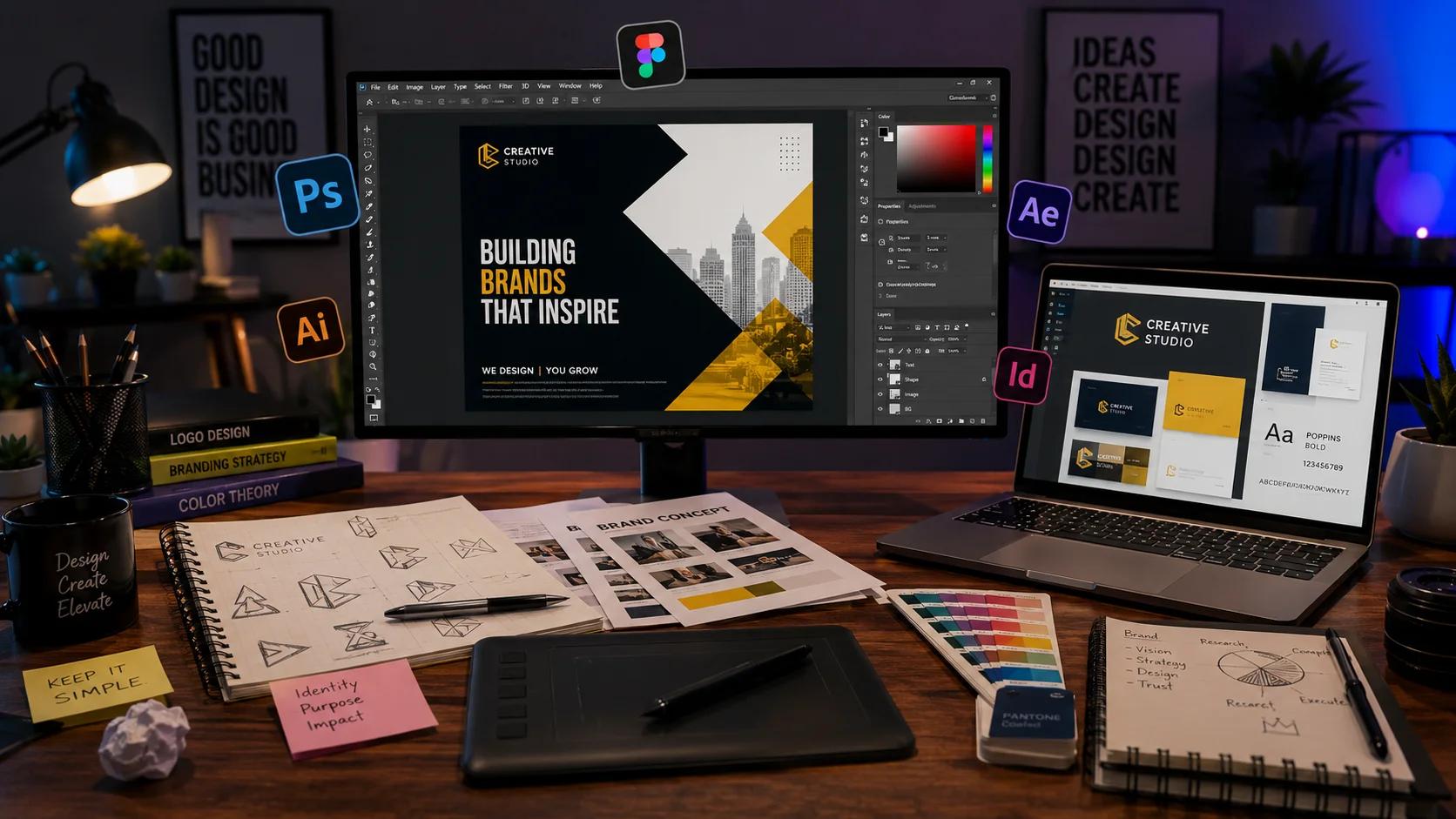
Hiring a professional graphic designer is different from hiring someone who "knows Photoshop". A good designer does more than make things look nice. They clarify your message, shape your visual identity, and create assets that support your business goals.
If you're hiring one for the first time, here's the short answer: expect discovery questions before design work, multiple revision rounds, clear timelines, and final files ready for both web and print. Anything less usually signals a rushed or inexperienced process.
Understanding what to expect upfront helps you set realistic timelines, ask better questions, and avoid the most common friction points clients run into during design projects.
What a Professional Designer Actually Does for Your Project
A professional designer's job goes well beyond making things look good. It starts with understanding your brand, audience, goals and then translating that into visuals that actually communicate something; not just visuals that look nice in isolation.
Here's what separates a professional graphic designer from someone who just knows the software: strategy. A pro doesn't open Figma or Photoshop and start designing immediately. They ask: Who is this for? What should they feel? What should they do next?
Typical deliverables may include:
- Logo and brand identity systems
- Marketing materials such as brochures, flyers and banners.
- Social media graphics and ad creatives
- Presentation decks and sales collateral
- Packaging designs and label systems
- Website UI elements and landing page visuals.
A designer's role is to make your brand look consistent, professional, and memorable across every touchpoint.
7 Things Every Client Should Know Before Hiring a Designer
1. Clear goals lead to better design
If you want into your first designer meeting expecting to see sketches and mood boards, you'll be disappointed.
Expect to be asked about your target audience, your competitors, your brand voice, your budget, your timeline, and what success actually looks like for this project. It might feel like overkill but here's the thing: designers can't read minds. They need to understand your world before they can visually translate it. The more honest and specific you are upfront, the less back and forth you'll deal with later. Vague briefs lead to vague designs.
2. Concept comes first, Polish comes later
You won't see a finished, pixel perfect masterpiece in round one. What you'll typically get are rough concepts; think mood boards, sketches, or low-fidelity layouts that explore different directions.
This early stage is about big picture decisions. Is the tone playful or serious? Should the layout be structured or organic? Should the colour palette lean warm or cool?
Resist the urge to nitpick fonts, spacing, or specific colours at this stage. Focus on whether the overall direction feels right for your brand. The polish comes after you've locked in the direction.
3. Design gets better with each round of feedback
Nobody nails it on the first try. Not even the most seasoned designers. Great design is iterative; it improves each time you go back and forth.
Most designers include a set number of revision rounds in their contract. Use them strategically. Group your feedback into batches rather than sending one-off comments every few days. It makes the process smoother for both sides.
4. Good feedback is specific. Vague feedback is useless
Here's a universal truth in the design world: "Make it pop" means absolutely nothing.
If something isn't working, try to explain why. Is the colour scheme too aggressive? Does the typography feel too formal for your brand? Does the layout make it hard to find key information?
Your designer wants to make you happy but need clear direction to get there. On their end, a good designer will always explain the reasoning behind their choices. If they push back on a change you've requested, hear them out; there's a usually a strategic reason for it.
5. Good design takes time. Rushing it backfires
Let's be real: you can't rush creativity. A logo might take a week or two. A full brand identity system? That could stretch over months.
Rushing your designer doesn't speed up the work; it just compresses the thinking time that makes design good in the first place. If you have a hard deadline, share it early with your designer can plan around it. Dropping a surprise deadline mid project is a great way to get rushed, low-quality results.
6. Show inspiration, not instructions
It is completely fine to share designs you admire. In fact, it's helpful. It gives your designer a sense of your taste and the vibe you're going for.
What's not helpful? Come in with an AI generated mock-up or a heavily edited example and asking the designer to recreate it exactly. That's not collaboration; it's copying.
Think of reference as mood, not a blueprint. Your designer's job is to interpret what to like and turn it into something original that actually fits your brand.
7. You're buying judgement, not just outputs.
Here's the part that surprises most first-time clients: you're not just paying for the final files. You're paying for the designer's judgement; their ability to know what will work, what won't, and why.
When a designer pushes back on your idea or suggests a different path, it's not because they're being difficult. It's usually because they've been down that road before and know where it leads.
Why Research and Strategy Come Before the First Pixel
Design that skips research often looks fine at first glance but fails at its actual job; standing out, building trust, or driving action. A professional designer spends time upfront understanding your competitors, audience expectations, and brand positioning before opening a design tool.
This is especially true for projects tied to marketing outcomes, like landing page design, or campaign creative, where visuals need to support a specific conversion goal, not just look polished.
Skipping this step is one of the most common reasons design projects need expensive rework later.
Why Hiring a Professional Designer Saves Time and Money
Hiring a professional designer often costs money upfront. But not hiring one costs more in the long run.
Think about it: a poorly designed brand sends the wrong message, confuses customers, and makes you look amateur. That translates to lost trust, lost sales, and a weaker brand presence.
Professional designers help you avoid those pitfalls. They bring clarity, consistency, and credibility to your visual identity. That pays off in ways that go beyond aesthetics.
At Arismeta, design work is treated as part of a broader growth process; connected to branding, web development, and marketing performance, not a one-off deliverable disconnected from business goals. That connection is often what separates design that simply looks good from design that actually helps a business grow.
Conclusion
Hiring a professional graphic designer is one of the smartest investments you can make for your brand. But it works best when you understand what the process actually looks like. Be open, be patient, trust the expertise, and communicate clearly and you'll end up with work that truly represents your business.
Arismeta approaches every project with a balance of strategy and creativity. Whether you need a fresh logo, a complete brand overhaul, or ongoing design support, we're here to bring your vision to life.
FAQs
1. What should I expect when hiring a professional graphic designer?
Expect a structured process including discovery, research, strategy, concepts, revisions, and organised final files.
2. How many revisions are included in a design project?
Most professional design projects include 2-3 rounds of revision as standard. Additional rounds are usually possible but may involve extra cost depending on the designer's process and project scope.
3. What's the difference between a graphic designer and a brand designer?
A brand designer focuses specifically on creating logos, typography, color systems, and the overall visual identity of a brand. A graphic designer works more broadly across various media; digital, print, packaging and advertising. Many designers do both, but brand design is typically more specialised.
4. Is hiring a professional designer more expensive than using templates?
Upfront costs are higher, but professional design typically reduces costly rework, inconsistent branding, and wasted time; making it more cost effective for businesses planning long term growth.