Product Photography vs Manipulation: A Practical Guide
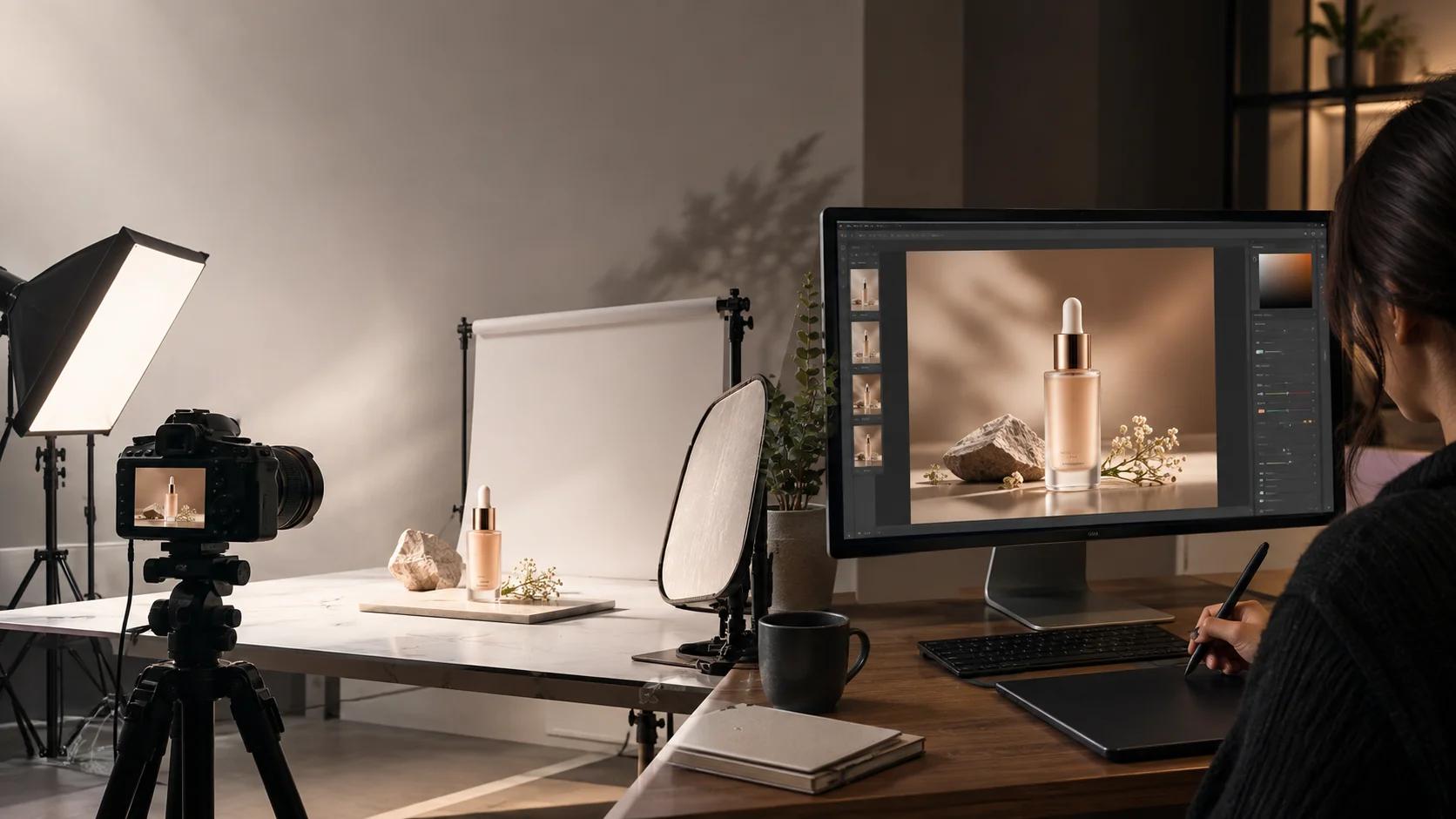
You have got a great product. Now comes the million-dollar question: how do you show it to the world in a way that actually sells? The answer usually comes down to two approaches: shooting it for real or enhancing it digitally. And honestly, most brands end up needing a mix of both.
Here's the thing: product photography and image manipulation aren't enemies. They're tools in the same kit, each with a specific job to do. The trick is knowing which one fits your product, your budget, and your timeline.
Let's break down what each approach actually delivers, when to use them, and how to stop overthinking which one is "better".
What's the Difference between Product Photography and Manipulation
Here's the simplest way to think about it: product photography captures what's there. Manipulation changes what's there.
Product photography is the art of shooting your product in a controlled environment; proper lighting, clean backgrounds, carefully positioned angles. What you see is what you get (though a good photographer will make it look significantly better than your phone snapshots).
Product manipulation, on the other hand, involves digitally altering images after the shoot. This could mean anything from removing the dust spots and colour correction to full on compositing; swapping backgrounds, adding reflections, or even creating images from scratch using 3D rendering.
The line gets blurry, though. Most professional product images use a combination of both. A well-shot product might have its background removed and replaced digitally. A manipulated image might start with a real photograph as its foundation. The question isn't which one is "better", it's which approach serves your specific product.
Types of Product Photography Every Brand Should Know
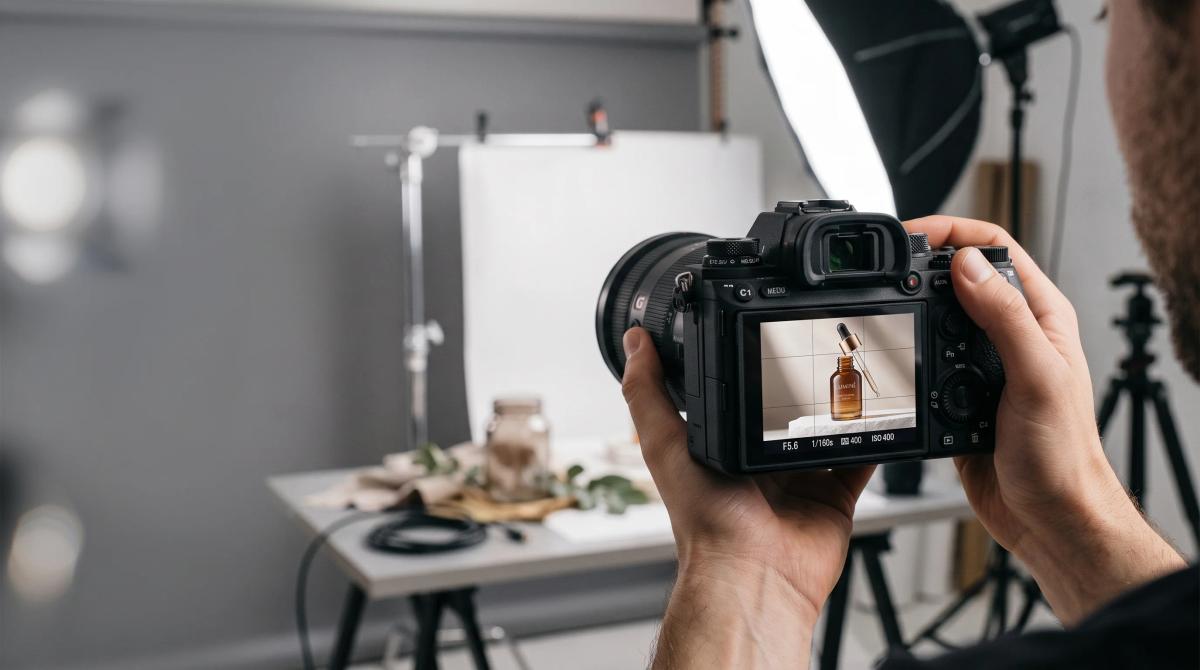
Not all product photography serves the same purpose. Choosing the right type or combination of types depends on where the image will be used and what it needs to communicate to the customer:
Studio photography:
Shot against a clean, plain background under controlled lighting, usually white or neutral. This is the standard format for e-commerce marketplaces like Amazon and Flipkart, which often require compliant, distraction-free product images. Studio shots prioritise clarity over storytelling.
Lifestyle photography:
Shows the product in a real-world setting or in use such as a coffee mug on a breakfast table or shoes on a person walking. This type helps customers picture how the product fits into their own life, making it especially effective for social media, homepage banners, and ad creatives.
Flat lay photography:
An overhead shot where products are arranged and photographed from directly above. Common in fashion, beauty, and accessories; flat lay works well for showing product combinations, textures, or a curated aesthetic in a single frame.
360-degree photography:
A series of images captured around the product and stitched together into an interactive view that customers can rotate on screen. This format reduces uncertainty for higher-consideration purchases like electronics, furniture, or footwear, where shoppers want to inspect every angle before buying.
Detail or macro photography:
Extreme close-up shots that highlight texture, stitching, material quality, or fine craftsmanship. This type builds trust for premium products where quality perception depends on visible detail; think leather goods, jewellery, or watches.
Pack shot photography:
Similar to studio photography but focused specifically on packaging, often used for FMCG, cosmetics, and food products where the packaging itself is part of the brand identity and purchase decision.
Group or set photography:
Multiple products photographed together to show a complete collection, bundle, or product family. This is useful for cross-selling and helping customers understand how items work together.
Most e-commerce catalogues use a mix of these types rather than relying on just one; studio shot for the main listing image, lifestyle and detail shots to build trust further down the page, and flat lays or group shots for marketing and social content.
Photography vs Manipulation: The Core Difference Explained
If you’re wondering which approach to lean into, here’s the breakdown:
Product photography
Pros: Authentic, builds trust with customers, captures real textures and materials accurately, faster turnaround for simple shoots, minimal post-production needed if done well.
Cons: Requires studio setup, lighting and equipment; expensive to re-shoot if you need changes; limited by physical product availability.
Best for: Showcasing texture-heavy products (fabrics, food, leather goods), building brand authenticity, situations where “real” matters.
Product Manipulation
Pros: Infinite flexibility; backgrounds, colours, and angles can be changed without re-shooting; cost-effective for variations (same product, multiple colourways); can create images that are physically impossible to shoot.
Cons: Can feel artificial if overdone; requires specialised skills; runs the risk of misrepresenting the product if pushed too far.
Best for: Complex products that are hard to photograph (electronic with reflective surfaces), marketing campaigns needing consistent visual style across many SKUs, situations where you need multiple variations without multiple shoots.
When to Choose Product Photography over Manipulation
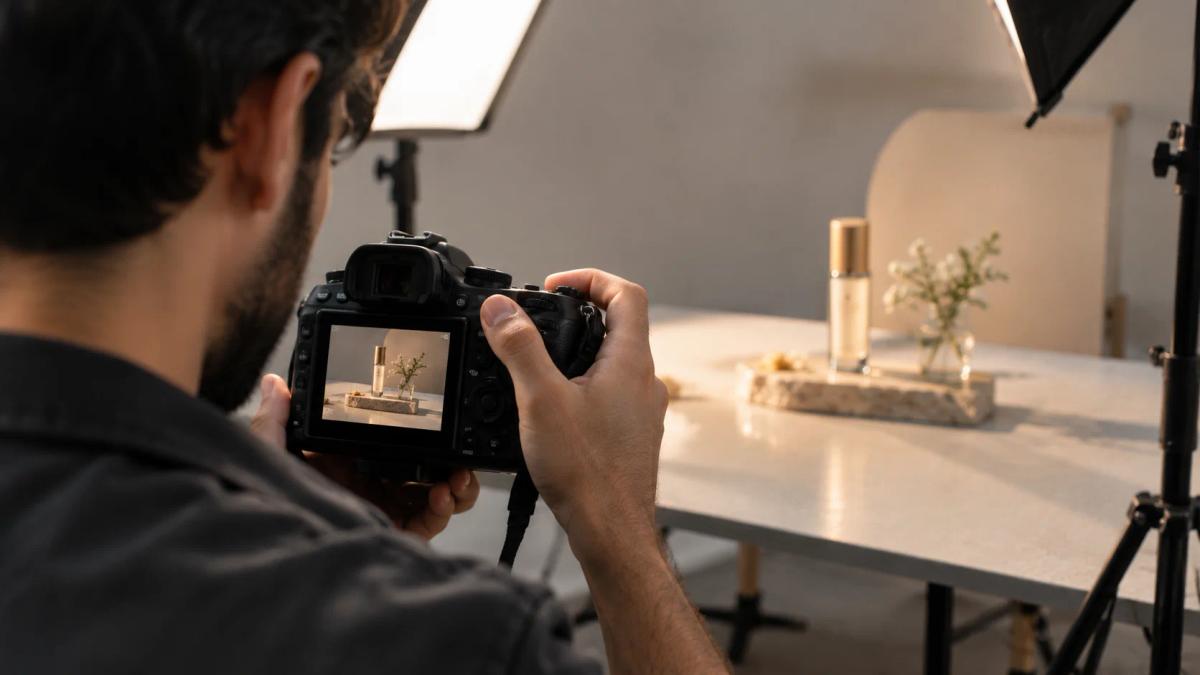
There's a time and place for pure photography. Here is when it wins:
You are selling tangible, physical products: Customers buying furniture, apparel, or food want to see how the product actually looks. Over-manipulated images feel misleading, and shoppers notice.
Your product has texture or material detail: Photography captures depth and grain in a way that digital manipulation struggles to replicate naturally.
You are building brand trust: Authenticity matters. If your product image looks too polished or artificial, customers might question whether the actual product will match.
Your budget is limited: For simple products, a solid photography shoot can be more cost-effective than complex manipulation workflows, especially when you account for the time and skill involved.
How Product Manipulation enhances Ecommerce Images
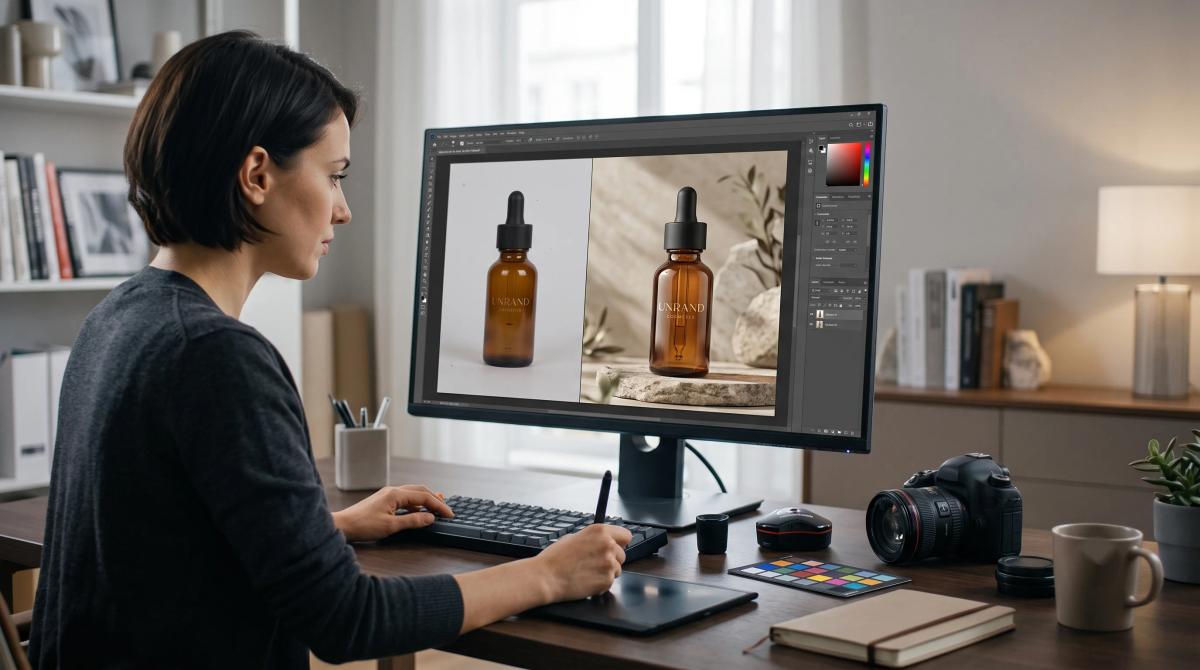
Manipulation is not about faking it; it is adding polish and flexibility to your photography. Common enhancements include:
Background removal and replacement: Creating clean white backgrounds or swapping in lifestyle scenes.
Colour correction and consistency: Ensuring products look the same across all images and platforms.
Shadow and reflection creation: Adding depth so products do not look flat or floating.
Compositing and variant creation: Showing multiple colours or angles without photographing every combination.
Resizing and format optimization: Preparing images for web, mobile, ads, and marketplaces with fast load times.
Defect removal: Cleaning dust, scratches, or minor imperfections that distract from the product.
These improvements help your images look professional and perform better in ads and search results.
Why the Best Results often combine Both Methods
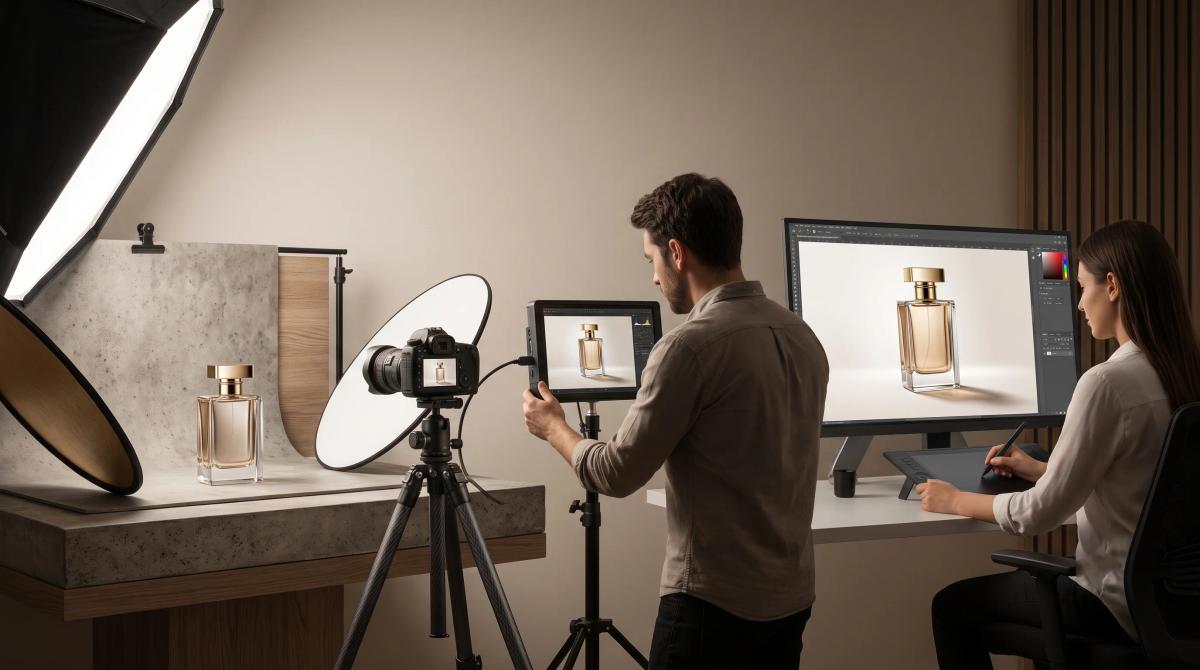
Top ecommerce brands do not choose between photography and manipulation. They use both strategically. Photography provides the authentic base. Manipulation ensures consistency, scalability, and platform optimization.
For example, a fashion brand might shoot lifestyle images for social media, white background shots for their website, and detailed close-ups for product pages. Then they use manipulation to create multiple colour variants, remove background for ads, and optimize file sizes for fast loading.
This combined approach saves money on reshoots while maintaining visual quality across channels.
Conclusion
Whether you lean into product photography, digital manipulation, or the smart middle ground between them, the goal remains the same: show your product in a way that makes customers want to buy it. Get clear on what your product needs, what your brand stands for, and what your customers expect and let that guide your choice.
Need help getting it right? At Arismeta, we blend professional photography with strategic image enhancement to create product visuals that actually convert. From e-commerce shoots to lifestyle campaigns, we have got you covered. Explore our creative services and let us make your products look the way they deserve.
FAQs
1. What is the difference between product photography and manipulation?
Product photography captures the product. Manipulation refines and optimizes the image after the shoot.
2. Which types of product photography should my brand use?
Start with white background, lifestyle and detail shots. Add 360 degree or packaging shots based on your product type.
3. When should I choose photography over manipulation?
Choose photography for new launches, premium products, and authentic brand storytelling. Manipulation enhances but cannot replace weak base images.
4. How does manipulation improve ecommerce images?
It removes backgrounds, corrects colours, add shadows, creates variants, optimises sizes, and cleans minor defects for a polished look.
5. Do I need both photography and manipulation for my store?
Yes. Photography provides the authentic base. Manipulation ensures consistency, scalability and platform readiness across channels.